presents
For Internationally Educated Nurses
Your Nursing Journey To Nova Scotia Starts Here.
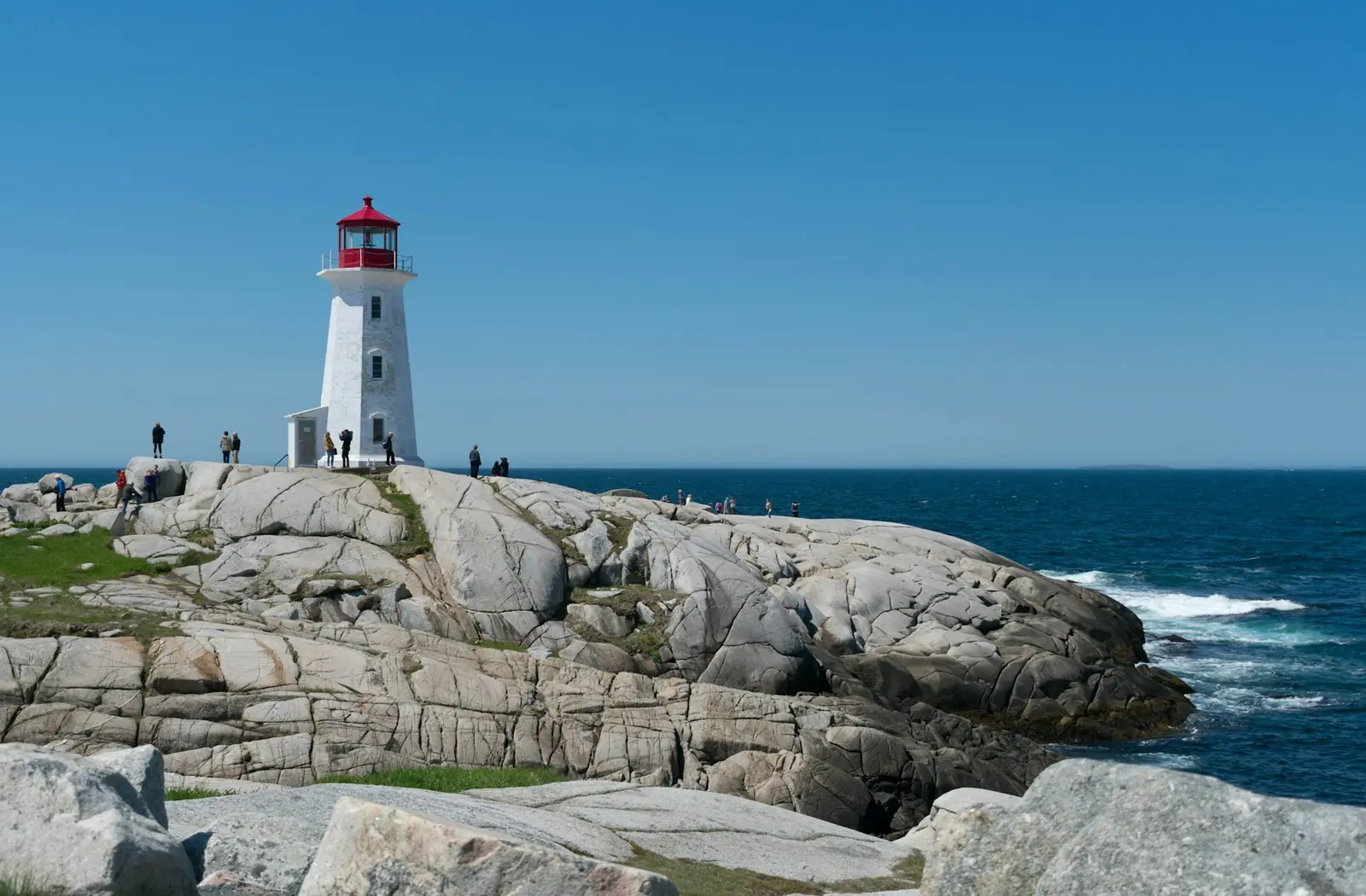
Everything you need to go from nursing abroad to an RN licence from the Nova Scotia Nursing and Midwifery Regulator: the three routes and which one is yours, every fee and who you pay, and the deadlines that catch people out. All in one place, in plain language.
See what is inside: get one year of access
What’s inside.
This self-help information guide is two resources in one: your nursing roadmap to registration, and your encyclopedia of Canadian culture and daily life.
- Six clear steps, from choosing your route to your yearly renewal, with a box to tick for each task.
- Nova Scotia’s 2026 changes explained: the new regulator name, the free jurisprudence declaration, and the work-permit rule starting December 1, 2026.
- Every fee and who you pay, with a budget worksheet that adds up your own costs.
- The conditional licence: how to work as an “RN pending” while you wait to write the NCLEX-RN.
- Eight Nova Scotia hospital towns, with their hospitals and newcomer centres.
- Scam warning signs and the mistakes that cost nurses time and money.
- Tools that do the math for you: a licensing budget, a monthly home budget, a home purchase calculator and a calendar tool that puts your deadlines in your phone.
- Nova Scotia by the numbers: where newcomers live and come from, the nursing workforce, compensation, cost of living, weather and the health system, all on one page.
- First Weeks: 23 practical steps for your first weeks, from your SIN, bank account and phone to renting a home, your health card (MSI), school for your children and getting ready for winter.
Flags of Nova Scotia.
The National Flag of Canada, the red and white flag with the maple leaf, flies across the whole country, in Nova Scotia too.
Nova Scotia’s own flag received a royal warrant from King George V in 1929. It was the first flag in the overseas Commonwealth authorized by royal charter. It takes the province’s shield, from arms granted in 1625, and extends it to fill a rectangle.
Official flower: the mayflower, also called trailing arbutus, adopted by the legislature in 1901.
Motto: “Munit haec et altera vincit”, meaning “One defends and the other conquers”.
Geography of Nova Scotia.
Here is the lay of the land, one part at a time.
Cape Breton Island: A plateau 300 to 450 metres high, with steep walls and stunted taiga on top, fills the north. Farther south, low land borders the Bras d’Or Lakes. Nova Scotia’s highest point, 532 metres, is here.
Northern mainland: Low land follows the Northumberland Strait from the New Brunswick border, with the Cobequid Hills and other uplands inland. Near the border, the Tantramar Marshes were dyked long ago by Acadian settlers.
Annapolis Valley and Minas Basin: This sheltered lowland seldom rises above 50 metres, with sandy soils along the valley and the Minas shore. Along the Bay of Fundy, a narrow strip of old lava forms the North Mountain.
Western interior: From South Mountain, the land tilts gently southeast toward the Atlantic, creating some of the province’s longest rivers. Mixed forest of spruce, fir, pine, maple and birch grows across it.
Eastern interior: From Bedford Basin to Guysborough, a low rocky upland slopes to the Atlantic. Its forests are mostly coniferous, with red and black spruce, and rivers such as the Tangier and Moser run through.
Atlantic coast: A cool, narrow coastal band runs from Yarmouth to eastern Cape Breton, usually under five kilometres wide. Bays and harbours, such as Mahone Bay and Shelburne Harbour, cut deep into it.
Did you know? The Bay of Fundy has the world’s highest tide, with a mean large tide of 16.1 metres.
Fun Facts.
Ten things that make Nova Scotia one of a kind.
- World-Record Tides at Burntcoat Head. Burntcoat Head Park says it has the world’s highest recorded tides, with an extreme range of 53.6 feet. Guinness World Records noted the Bay of Fundy’s tidal flow in 1975. A replica of the old lighthouse was finished in the 1990s. Source: Burntcoat Head Park (Municipality of East Hants).
- Joggins Fossil Cliffs. These Bay of Fundy cliffs are a UNESCO World Heritage Site, said to hold the world’s most complete fossil record of the Coal Age. They tell a 300-million-year-old story. Hylonomus lyelli, described as the oldest known reptile, is Nova Scotia’s provincial fossil. Source: Tourism Nova Scotia.
- Canada’s First Aeroplane Flight. On February 23, 1909, a biplane called the Silver Dart lifted off the frozen surface of Baddeck Bay and flew 800 metres with J.A.D. McCurdy at the controls. It was built by a group that Mabel and Alexander Graham Bell founded. Source: Parks Canada.
- Sable Island’s Wild Horses. Far out at sea, 290 km southeast of Halifax, Sable Island is a narrow, curved strip of moving sand. Parks Canada looks after this remote place, best known for its wild horses. Grey seals live there too. Source: Parks Canada.
- The Order of Good Cheer. To lift spirits during the long winter of 1606-07, Port-Royal’s French colonists began a dining society. Members took turns as Chief Steward, making sure the table was well supplied, and Mi’kmaw chiefs Membertou and Messamouet often joined them. It lasted just one winter. Source: Parks Canada.
- Maud Lewis’s Tiny Painted House. Folk artist Maud Lewis and her husband Everett lived in a tiny house in Marshalltown, Digby County. After both died, the province bought it in 1984 and restoration began in 1996. The restored house now sits on permanent display inside the Art Gallery of Nova Scotia. Source: Art Gallery of Nova Scotia.
- Giant Angus MacAskill. Born in Scotland in 1825, Angus MacAskill is recorded at seven feet nine inches and 425 pounds. His museum says he raised a 2,800-pound ship’s anchor to chest height, and that Guinness recognized him in 1981 as the largest true giant who ever lived. Source: Giant MacAskill Museum.
- Home of the Atlantic Giant Pumpkin. The late Howard Dill of Windsor, a four-time world champion grower, developed and patented the Dill’s Atlantic Giant pumpkin. The municipality says this variety has produced pumpkins weighing more than 1,600 pounds. Source: West Hants Regional Municipality.
- The Bluenose, Champion on the Dime. The schooner Bluenose was launched at Lunenburg on March 26, 1921, and became an undefeated racing champion. You can see her under full sail on the Canadian dime. Bluenose II followed in 1963. Source: Government of Nova Scotia, Bluenose II.
- Kejimkujik’s Rock Carvings. More than 500 Mi’kmaw petroglyphs are found here, one of eastern North America’s largest collections of such images. They show sea-going canoes, peaked hats worn by Mi’kmaw women, and even artists’ signatures. The carvings can only be visited on a guided tour. Source: Parks Canada.
Checked against official sources in fall 2026.